10.01.2026 20:59
From a like to a criminal case. How social media reshaped the limits of free speech
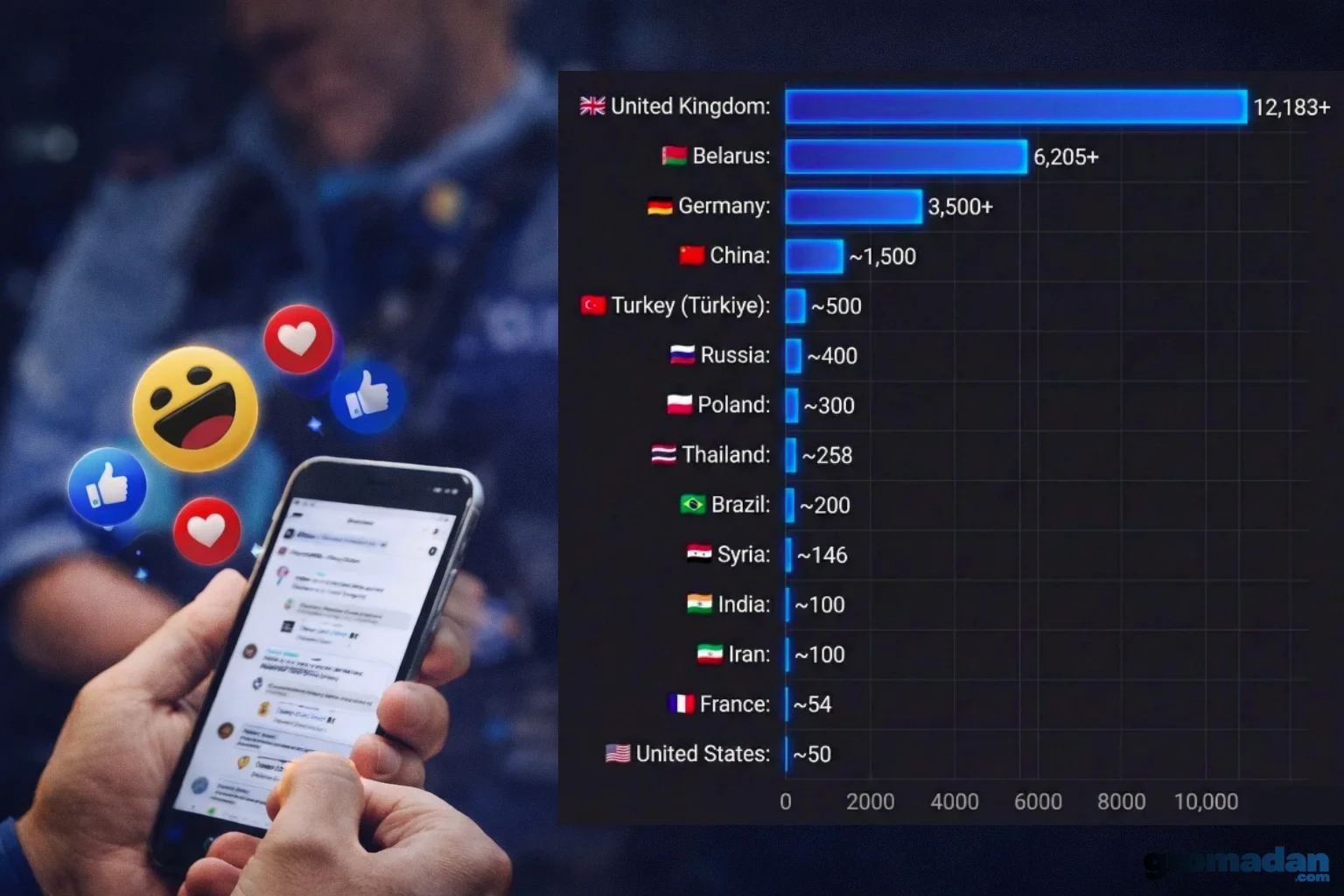
The United Kingdom has topped the global ranking for the number of arrests related to comments and posts on social media. According to the data presented in the infographic, more than 12,000 arrests linked to online expression have been recorded in the country — the highest figure worldwide.
By comparison, Belarus has reported around 6,200 cases, while Germany has registered more than 3,500. Even countries known for strict internet regulation, such as China or Turkey, show significantly lower numbers.
Experts note that this trend goes beyond combating threats or extremism and reflects a systematic expansion of criminal liability for digital activity, including comments, reposts, and reactions.
What the infographic shows
The infographic titled “Countries with the most arrests for online comments” illustrates the number of arrests connected to online communication. The United Kingdom clearly ranks first, with 12,183 recorded arrests, far surpassing other countries.
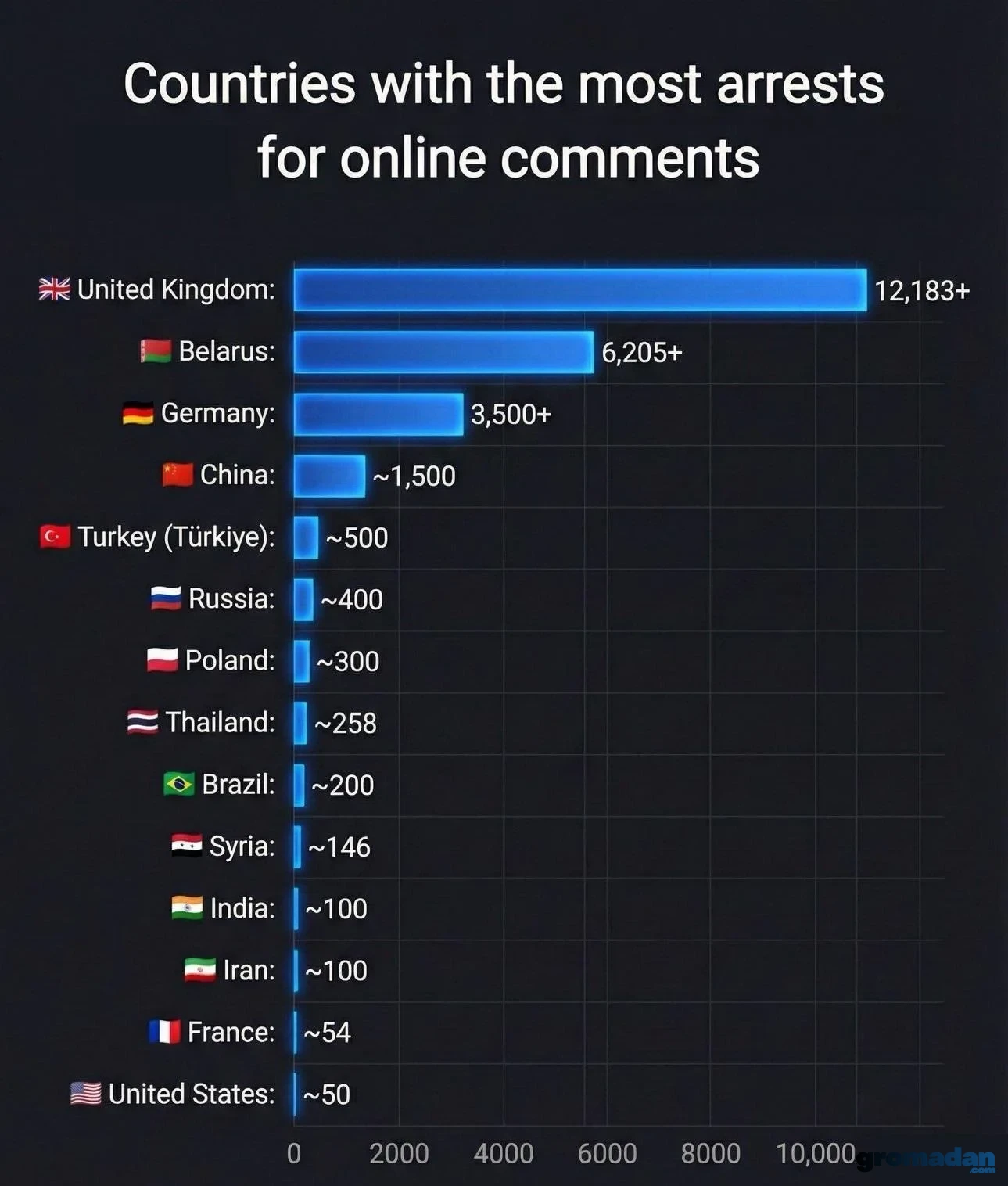
Analysts emphasize that in most cases these figures do not refer to convictions, but rather to arrests, interrogations, and investigations, which themselves constitute a serious intrusion into personal privacy.
Laws applied in the United Kingdom
The legal basis for these cases includes:
- Communications Act 2003
- Malicious Communications Act 1988
These laws allow authorities to prosecute messages deemed “offensive,” “malicious,” or “causing distress.” Their broad wording, critics argue, gives law enforcement wide discretion in interpretation.
How the situation evolved
The first high-profile cases emerged in the early 2010s, when courts began treating tweets and posts as full-fledged public statements. As social media expanded and political pressure on platforms increased, the number of investigations grew rapidly.
A new phase began with the adoption of the Online Safety Act, whose provisions started to be actively enforced in 2024. The law strengthened accountability for online content and broadened the range of potential violations.
Expert opinion
Digital rights lawyers point out that the UK has become an example of a country where arrest itself is used as a response mechanism, even when cases do not ultimately result in court convictions.
“The mere fact of arrest and investigation already has a chilling effect. People begin to self-censor, fearing the consequences of any online expression,” free speech experts say.
Why other countries differ
In the United States, which ranks near the bottom of the infographic, strong constitutional protections for free speech make criminal cases over comments relatively rare. Meanwhile, some countries that previously enforced strict measures are now reconsidering their approaches and easing liability.
The infographic does more than present arrest statistics — it highlights a global shift in how freedom of expression is treated online. In a reality where a comment or reaction can trigger criminal proceedings, the debate over digital rights boundaries is becoming increasingly urgent.