

 Real Estate
, city community
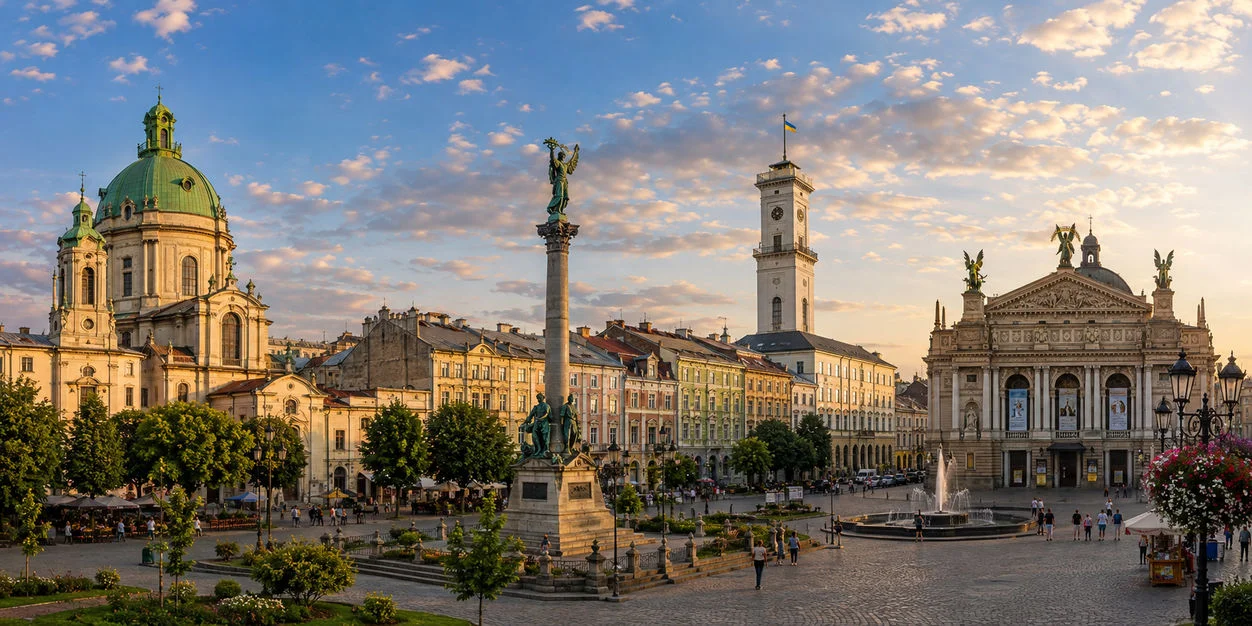
Lviv emerged in the 13th century and became one of the principal cities of historic Galicia. Its foundation is traditionally associated with Prince Danylo Romanovych, who is said to have named the settlement after his son Lev. In 1272, Lviv became the capital of the Kingdom of Galicia–Volhynia, beginning a period of rapid political, commercial, and cultural growth.
In the 14th century, the city became part of the Kingdom of Poland and later an important center of the Polish–Lithuanian Commonwealth. Its position along major trade routes connecting Central and Eastern Europe brought merchants, craftsmen, and communities from different parts of the continent. In the late 18th century, Lviv came under Habsburg rule and became the capital of the Kingdom of Galicia and Lodomeria, experiencing major advances in education, science, architecture, and civic life.
The 20th century brought dramatic political changes, two world wars, and the Soviet period. Since 1991, Lviv has been part of independent Ukraine. Today, it is one of the country's best-known cultural and tourist destinations, celebrated for its historic center, atmospheric old streets, churches, and architecture shaped by several European traditions.
About
| Founded | 1256 |
| Population | 717,510 |
| Area | 182.03 km² |
| Country | Ukraine |
| Region | Lviv Oblast |
| Time zone | Europe/Kiev |
 Real Estate