 Technology
Space War Could Start Within Five Years: What We Know About US, China, Russia, and UK Plans
On September 14, 2026, US Secretary of the Air Force Troy Meink made a historic statement: the US Space Force has already deployed space control assets in orbit to protect against hostile actions. This admission, coupled with the UK's updated space strategy that same month featuring an £880 million budget, has shifted discussions of "space war" from science fiction into the realm of actual military doctrine.
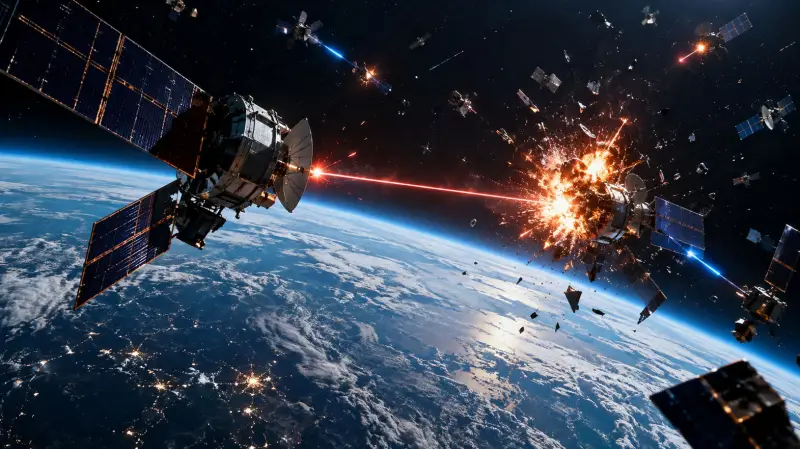
However, the forecast of a full-scale conflict within five years requires clarification. We are not talking about Hollywood-style battles, but rather the comprehensive suppression of satellite infrastructure.
US Weapons Already in Orbit
The Pentagon's statement marked a turning point. Unlike previously known ground-based electronic warfare complexes (such as the Counter Communications System, operational since 2020), these new assets are located directly in space.
Details remain classified: it is unknown whether these systems are kinetic interceptors, directed-energy weapons, or platforms for cyber interference. Nevertheless, the mere fact of their deployment indicates that the US has transitioned from passive defense to active control of orbital space.
UK Builds an £880 Million Shield
London is not developing offensive orbital weapons but is actively building a "space shield." Under the updated 2026–2030 strategy, £880 million has been allocated for space intelligence and control. Key elements include:
- Noctis-1: A military telescope for tracking orbital objects and preventing collisions.
- Borealis: A software platform by CGI UK (£65 million contract) that aggregates data for threat analysis. The system was brought online six months ahead of schedule.
- eLoran: A ground-based navigation system (£6 million contract with Team Elaris) created as a backup in case GPS/GLONASS signals are jammed.
China and Russia in the Space Arms Race
China is betting on dual-use technologies. In 2025–2026, successful rendezvous and docking maneuvers by the "Shijian" satellite series for refueling and inspection were recorded. The same robotic arm that services its own satellite could potentially disable a foreign one without creating a debris cloud.
Russia possesses confirmed kinetic capabilities. The November 2021 test of the "Nudol" system, which destroyed the "Cosmos-1408" satellite, proved its ability to strike targets in low Earth orbit. Furthermore, the US intelligence community continues to classify Russia's development of nuclear-armed anti-satellite weapons as a critical threat in its 2026 reports, despite official denials from Moscow.
What a Space War Actually Looks Like
The conflict will not begin with explosions, but with "invisible" attacks that paralyze the enemy's economy and military on Earth:
- Electronic warfare: Jamming of communication and navigation signals (already regularly used in modern conflict zones).
- Cyberattacks: Hacking ground control stations to hijack or disable a satellite.
- Sensor blinding: Using low-power ground-based lasers to damage the optics of reconnaissance satellites.
- The debris problem: Any kinetic destruction creates thousands of fragments. According to the Secure World Foundation, past tests by the US, Russia, China, and India have already generated over 6,900 cataloged debris pieces, threatening all orbital assets, including civilian ones.
Legal Vacuum
The 1967 Outer Space Treaty prohibits placing only weapons of mass destruction (nuclear, etc.) in orbit. Deploying conventional weapons or electronic warfare systems does not formally violate this treaty, creating a dangerous legal vacuum actively exploited by major powers.
The threat of space conflict is real, but it is hybrid in nature. Over the next five years, the world will face not orbital bombings, but an escalation of "gray zone" tactics: navigation jamming, satellite cyberattacks, and aggressive proximity maneuvers. The current race is not about destruction, but about survivability and the ability to rapidly restore orbital constellations.