 Technology
Greece bans social media for children under 15. The law takes effect on January 1, 2027
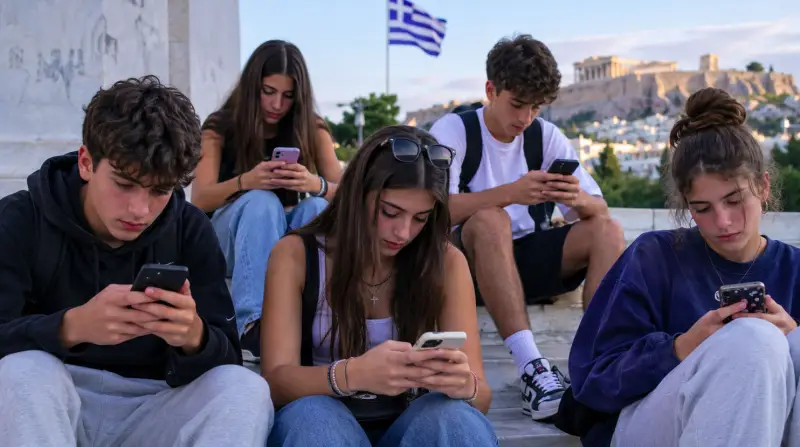
On October 23, 2026, the Greek Parliament concluded lengthy debates by passing a landmark bill banning children under 15 from accessing social media. The law takes effect on January 1, 2027. This is not a blanket internet ban, but a targeted measure against algorithms designed to hijack teenagers' attention.
Who and what the ban affects
The law targets classic social platforms: Facebook, Instagram, TikTok, and Snapchat. Meanwhile, messaging apps (WhatsApp, Viber) and video hosting sites (YouTube) are currently treated as exceptions, provided their core functionality does not meet the strict legal definition of a social network.
A key innovation of the law is that simply entering a birth date during registration is no longer sufficient. According to a 2025 survey by the Greek center Safeline, 66% of primary school students and 74% of high school students already provide false ages. To curb this, platforms are now mandated to implement robust digital age verification.
Digital tokens instead of passports
Greece will not require platforms to collect passport scans, which would violate GDPR. Instead, an "age token" system is proposed:
- Users verify their age via state apps like Gov.gr Wallet or Kids Wallet.
- The platform receives only a binary response: "age threshold met" or "not met," with no access to personal data.
- Re-verification will also apply to all existing accounts. If age cannot be confirmed, access will be blocked, and parents cannot bypass this system by granting permission.
Fines and accountability
The burden of compliance falls on tech companies, not parents or children. Enforcement will operate through the mechanisms of the European Digital Services Act (DSA). Non-compliant platforms face:
- Fines of up to 6% of their global annual turnover.
- Periodic penalty payments until violations are resolved.
- Additional sanctions from the Hellenic Data Protection Authority (HDPA) for unlawful data processing.
Why the law sparked fierce debate
The bill passed without cross-party consensus. The ruling New Democracy party voted in favor, while the opposition raised serious concerns:
- PASOK's alternative: Socialists proposed a more flexible model—a total ban under 13, and restricted, parent-controlled access for 13–14-year-olds to foster digital literacy.
- Privacy risks: A coalition of 25 civil rights organizations (including Homo Digitalis) warned that centralized verification systems risk biometric data leaks and mass digital surveillance of minors.
- EU conflict: The European Commission has already requested clarifications, as the Greek law could fragment the single digital market, overlapping with the broader EU-wide EU KIDS Act introduced in September 2026.
Greece is becoming the first EU country to enforce such a strict age limit in the digital space. Platforms have roughly two months until January 1, 2027, to adapt their systems. The ultimate question, which only practice will answer, is whether technical verification will truly protect children's mental health, or merely drive teenage traffic to less regulated and more dangerous corners of the internet.