


0

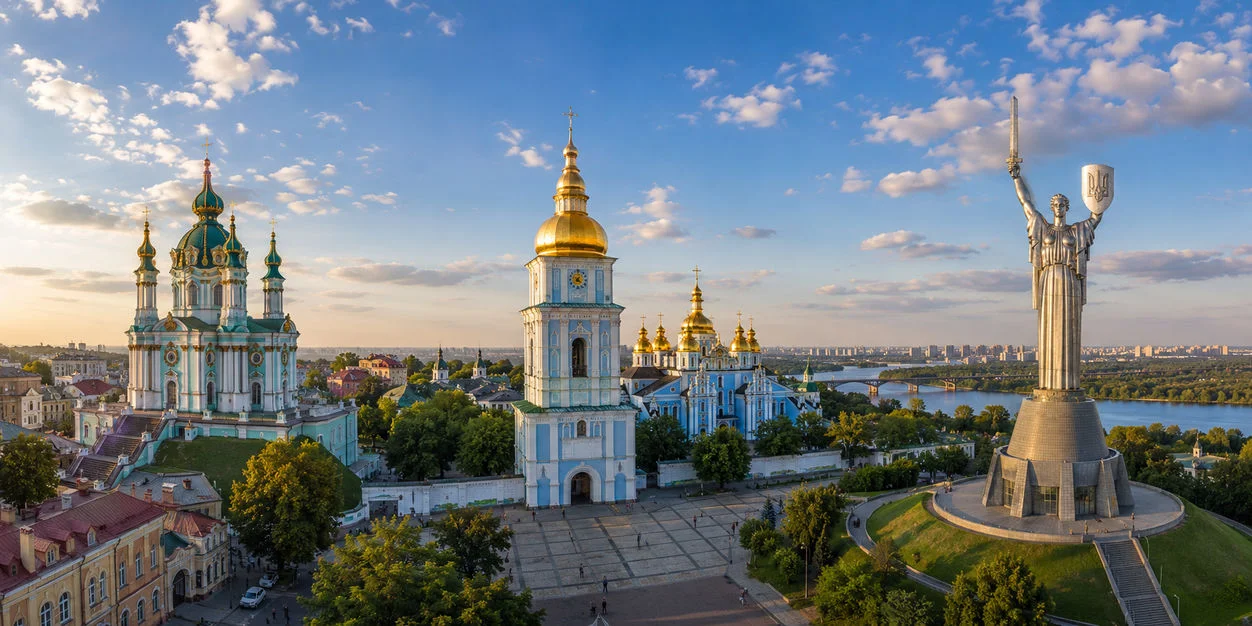
Kyiv is one of Europe's oldest cities and a historic center of Ukrainian lands. According to the traditional chronicle account, it emerged in the late 5th or early 6th century and was associated with the legendary founders Kyi, Shchek, Khoryv, and their sister Lybid. By the 9th and 10th centuries, Kyiv had become the capital of Rus and an important hub of trade, craftsmanship, government, and culture.
The city reached a remarkable period of prosperity in the 11th century under Yaroslav the Wise. During his reign, landmarks such as Saint Sophia Cathedral and the Golden Gate were built, while Kyiv developed into one of the major political and religious centers of Eastern Europe. The Mongol invasion of 1240 caused severe destruction, after which the city passed through the rule of the Grand Duchy of Lithuania, the Polish–Lithuanian Commonwealth, and the Russian Empire.
The 20th century brought revolutions, wars, occupation, and profound political changes to Kyiv. During 1917–1921, the city became one of the main centers of the Ukrainian struggle for statehood, and in 1934 it became the capital of the Ukrainian SSR. After Ukraine declared independence in 1991, Kyiv became the capital of the modern Ukrainian state. Today, it is the country's largest city and its leading political, economic, scientific, and cultural center.
| Founded | 482 |
| Population | 2,952,301 |
| Area | 839.00 km² |
| Country | Україна |
| Region | Kyiv Oblast |
| Time zone | Europe/Kiev |