


3

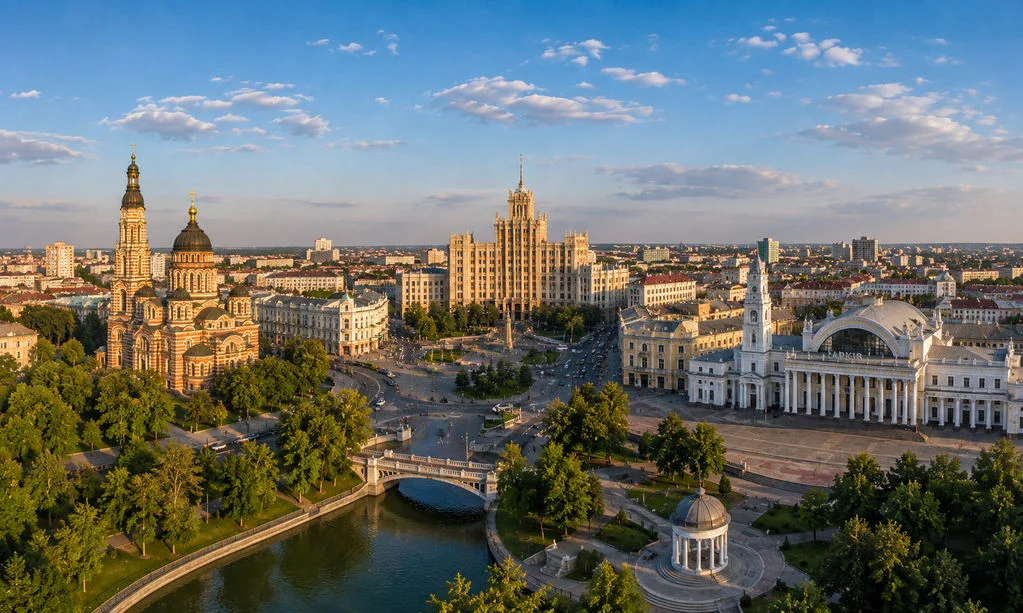
Kharkiv emerged in the mid-17th century in the historic region of Sloboda Ukraine, where numerous new settlements were being established. The traditional founding date is 1654, when a fortified community of Ukrainian Cossacks and settlers began developing along the Kharkiv River. Its favorable location soon helped the settlement grow into a regional center of trade, crafts, and administration.
During the 18th and 19th centuries, the city expanded rapidly and gained wider importance. The University of Kharkiv opened in 1805 and became a major center of education and scholarship. The arrival of the railway, together with industrialization and growing trade, transformed Kharkiv into a powerful economic hub. By the beginning of the 20th century, it had become one of the leading industrial cities in Ukraine.
Kharkiv experienced revolutions, political upheaval, Soviet rule, German occupation, and extensive postwar reconstruction during the 20th century. From 1919 to 1934, it served as the capital of the Ukrainian SSR, a period that strongly influenced the city's architecture and political history. After Ukraine gained independence, Kharkiv remained a major center of industry, science, higher education, and culture. Today, it is one of the country's largest cities, recognized for its universities, monumental squares, Constructivist architecture, and rich cultural heritage.
| Founded | 1654 |
| Population | 1,443,207 |
| Area | 350.00 km² |
| Country | Україна |
| Region | Kharkiv Oblast |
| Time zone | Europe/Kiev |